

Menu
Key Takeaways
- U.S. creator ad spend has climbed to USD 37 billion, requiring brands to shift from simple broker models to social-first media networks.
- Pure play matchmakers rely entirely on paid boosting, while owned-and-operated publishing portfolios guarantee direct organic distribution.
- Evaluate agencies on content monetization and distribution power, scoring them from 1 to 5 to measure actual audience connection.
Why is creator spend surging in 2026 and why does your agency choice matter?
The era of treating creator partnerships as a secondary marketing experiment is officially over. U.S. creator ad spend has climbed to a staggering 37 billion USD according to the Interactive Advertising Bureau[1]. This makes it the fastest-growing digital ad segment on the planet. As brands funnel unprecedented budget into this space, finding the right partner to execute these campaigns is no longer just about hiring a team to match you with talent. It requires a disciplined approach to selecting long-term strategic partners who can drive real engagement through genuine, community-led narratives.
Supercharge your socials with direct organic distribution
To understand the scale of this shift, we must look at the overall market. Analysts project that the total addressable market for the creator economy will approach 480 billion USD by 2027[2]. In a landscape of this magnitude, standard transactional campaigns and flat sponsorships are failing to cut through the digital noise. Traditional agencies act purely as intermediaries, charging high placement fees to lease third-party audiences. A social-first media company like Wavelength operates differently. By owning and operating a powerhouse portfolio of social channels with over 320 million combined followers and generating 950 million+ monthly views, a social-first network provides direct organic distribution that traditional agencies simply cannot replicate.
| Partnership Model | Traditional Agencies | Social-First Networks |
|---|---|---|
| Distribution Strategy | Rely entirely on paid boosting and renting third-party creator reach. | Provide direct organic distribution across owned niche channels and creator portfolios. |
| Campaign Focus | Transactional sponsorships, flat product placements, and ad-hoc talent brokerage. | Authentic storytelling, community narrative building, and deep audience connection. |
| Scale and Metrics | Inconsistent reach dependent on individual creator algorithms and ad spend. | Guaranteed distribution power backed by massive monthly views and combined followers. |
Drive brand value through narrative alignment
Winning in 2026 requires moving beyond transactional influencer campaigns toward full brand-creator alignment. Modern audiences, exhausted by traditional corporate advertising and empty buzzwords, crave real narrative. They actively seek out channels that offer authentic storytelling. High-impact campaigns must prioritize deep connection over superficial product mentions. Whether you are running complex campaigns across platforms like Instagram, TikTok, and YouTube, or launching major events, your choice of agency determines whether your budget translates to actual, long-term brand equity or just fleeting vanity metrics.
This is why brand marketers and agency partners need a rigorous, disciplined framework to evaluate their options. A true partner must go beyond simple talent brokerage to offer comprehensive services like Creator Collaboration that blend creative production, strategic distribution, and deep community insights. Let us dive into the precise checklist and scorecard you need to filter out traditional middlemen and select an agency that can truly scale your brand.
How do you distinguish traditional broker agencies from social-first media networks?
With global influencer marketing spend projected to expand by another 15.7% in 2026[3], brand marketers are fighting for attention in an incredibly fragmented digital media landscape. Yet many are wasting significant budget on outdated models. Traditional influencer marketing agencies operate primarily as high-margin brokers. They act as middleman matchmakers, charging steep coordination fees simply to connect brands with independent creators and run paid social ads. This model has severe organic reach limitations, as brands must pay twice: first to secure the creator's content, and then to boost it with paid ad spend because the broker agency owns no distribution of its own.
Leveraging owned and operated niche channels for guaranteed organic inventory
In contrast, a modern social-first media company or network, such as Wavelength, combines the capabilities of an agency, a social publisher, and an expansive distribution network. Rather than relying solely on external talent, these networks own and operate a powerhouse portfolio of niche publishing vertical pages and creator channels that cater to specific passion points and niche audiences. By choosing a partner with its own media properties, brands gain direct access to guaranteed organic inventory. Instead of standard advertising or product placements, brands can leverage a massive network of dedicated content channels to distribute authentic storytelling that naturally resonates with passionate communities.
| Capability | Traditional Broker Agencies | Social-First Media Networks |
|---|---|---|
| Primary Business Model | Middleman brokers that charge high margins for matching brands with external creator talent | Hybrid publisher-networks combining agency services with owned distribution properties |
| Distribution Power | Zero owned distribution; entirely reliant on creator feeds and paid ad-boosting spend | Direct organic distribution through a portfolio of owned-and-operated media channels |
| Audience Reach | Variable and dependent on selected creator algorithms and ad campaign budgets | Guaranteed access to massive niche audiences and hundreds of millions of monthly views |
| Campaign Execution Focus | Standard sponsored posts, product placements, and commercial transactional briefs | Story-led campaigns and authentic storytelling integrated across niche passion points |
For brand marketers and agency partners trying to maximise return, evaluating this hybrid publisher-network advantage is key to sustainable campaign scaling. Operating as a social-first media network, Wavelength engages over 950 million monthly views and 320 million combined followers across platforms like Facebook, Instagram, Snapchat, YouTube, and TikTok. This scale provides concrete evidence of distribution power that traditional broker agencies simply cannot match. By shifting from passive sponsorships to direct organic distribution, brands can supercharge their socials, grow loyal followings, and drive real brand value without exhausting budgets on low-impact paid boosting. Whether you are looking to manage an always-on content engine through Social Media Management or design high-impact live experiences, partnering with a hybrid network guarantees that your campaign achieves authentic storytelling and real engagement.
What are the 10 critical vetting questions on the ultimate 2026 agency checklist?
As creator ad spend surges to record heights, traditional influencer marketing models are struggling to deliver real results. Many brands find themselves trapped in a cycle of paying hefty premiums for inflated, bot-driven reach that yields zero actual business value. In 2026, navigating this fragmented digital landscape requires looking deeper than an agency's roster of macro-influencers. Forward-thinking marketers are shifting from superficial metrics to a rigorous framework that focuses on direct organic distribution, first-party audience metrics, and authentic storytelling. To secure high-ROI campaigns, brands must deploy a thorough vetting process designed to filter out simple matchmakers and isolate true media networks with built-in distribution power. Evaluating an agency's underlying capabilities and verifying that their creator partnerships drive active, real community engagement is now a matter of basic risk management rather than optional optimization[4].
Auditing network quality and distribution rights
Many pure-play creator agencies operate simply as middlemen, purchasing third-party ad inventory and renting external creator reach. This model leads to significant content leakage, where expensive creative assets fail to achieve organic traction because the agency lacks direct control over the distribution channels. To maximize return, brands should seek a partner that functions as a hybrid publisher and network. For example, Wavelength operates as a social-first media company with its own high-traffic network of media channels and niche publishing vertical pages, delivering over 950 million monthly views and reaching a combined audience of more than 320 million followers. This direct ownership allows brands to bypass the standard limitations of rented inventory and tap into established communities with built-in organic distribution. When vetting an agency, verifying direct distribution rights and first-party data access is critical to ensuring your campaigns perform without losing momentum.
- Do you own and operate your own social publishing channels, or do you act purely as a matchmaking middleman between creators and brands?
- How do you verify first-party audience demographic data and community engagement rates to filter out bot-driven reach?
- What direct distribution rights and licensing terms do you secure with creators to guarantee long-term campaign usage and syndication?
- How do you prevent content leakage and ensure high-impact campaigns gain organic distribution without relying entirely on paid ad boosts?
- What legal compliance frameworks and disclosure guidelines do you enforce across different regional markets to protect brand reputation?
- Do you have in-house production infrastructure and studio capabilities to design high-impact short-form video formats and live experiences?
- How do you measure high-intent community metrics like shares and saves instead of relying on superficial vanity metrics like likes?
- What is your process for embedding authentic storytelling and deep narrative alignment between the creator and the brand identity?
- Can you provide transparent, real-time performance reporting using direct platform API integrations rather than manual spreadsheet exports?
- How do you assist partners in monetizing their intellectual property and unlocking additional off-platform revenue streams?
Supercharge your socials with authentic narrative
To build a high-performance creator ecosystem, brands must move away from dry product placements and embrace narrative-driven strategies that foster true audience connection. Our Creator Collaboration services are designed to build these deep-seated relationships by aligning brands with passionate, niche communities through direct collaboration. Rather than pushing standard corporate sponsorships, we prioritize authentic storytelling that flows naturally within the creator's native content format. This ensures that every campaign resonates deeply, driving both immediate engagement and long-term brand equity.
Pairing these collaborative efforts with a professional Social Media Management program allows brands to maintain an always-on content engine that continues to feed the algorithm long after the initial push. By combining direct organic distribution, verified first-party audience metrics, and structured campaign governance, you can confidently navigate the creator landscape in 2026. This dual approach ensures your brand drives brand value, maximizes campaign return, and eliminates the typical risks associated with traditional agency models[5].
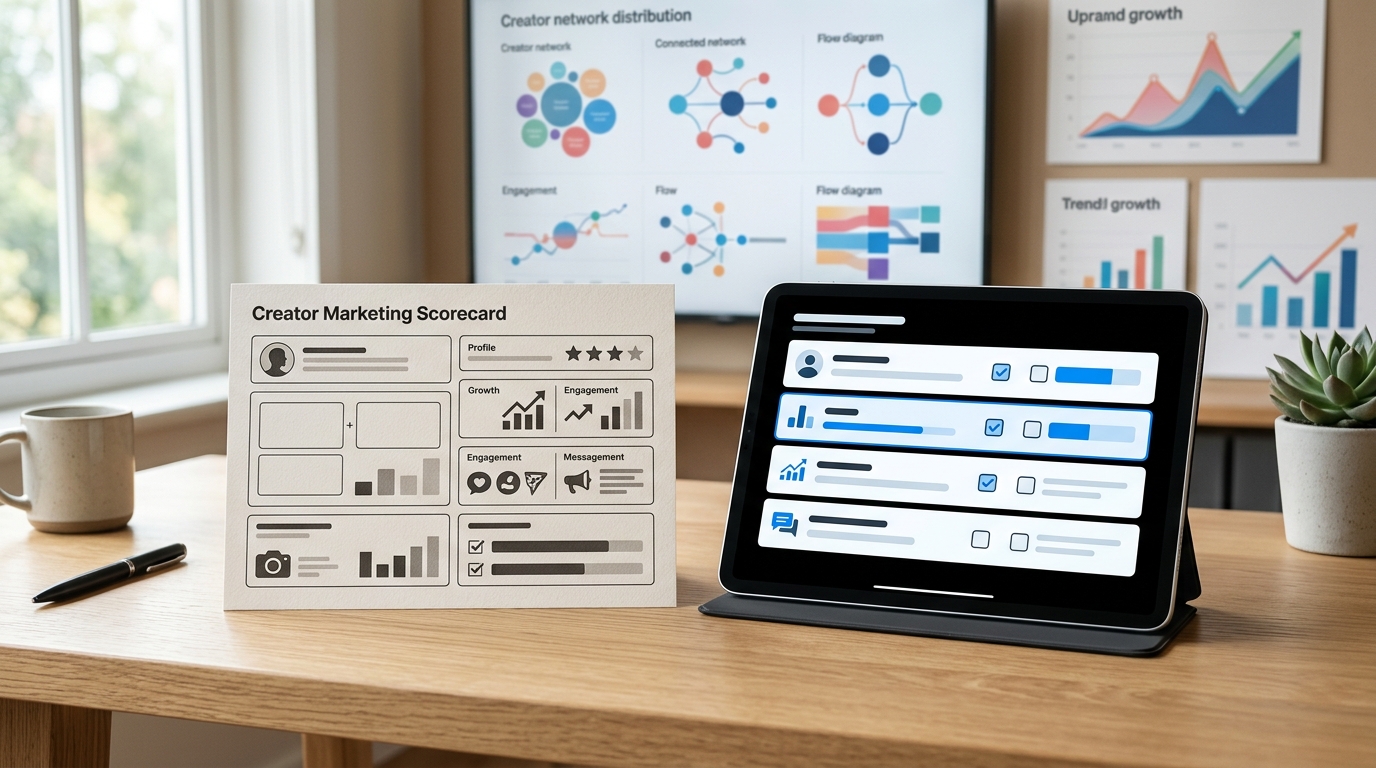
How do you score prospective agencies using our 1-to-5 evaluation framework?
Selecting a partner in a market projected to reach 40.51 billion dollars in 2026 requires an objective, quantitative approach that strips away emotional bias and slick sales pitches[6]. Many brands struggle because they evaluate partners based on glossy creative decks rather than measurable distribution power and capability. This is where a standardized evaluation rubric becomes essential. By assessing agencies on a strict 1-to-5 scale across their core operational pillars, you can systematically identify which teams actually possess a distribution network and which are simply marked-up talent brokers. For brands looking to supercharge your socials and maximize campaign ROI, this scorecard provides the clarity needed to make a risk-free investment.
The evaluation framework grades candidates across three critical pillars: creative execution, distribution infrastructure, and measurement depth. A standard influencer agency typically operates as a basic talent intermediary, adding an administrative markup to creator fees while shifting all distribution risk onto your paid media budget. In contrast, a modern social-first media company or network like Wavelength combines the creative expertise of an agency with the immediate reach of a publisher. This hybrid model ensures that campaigns are built for authentic storytelling rather than low-impact product placements, utilizing direct access to a massive organic audience.
Evaluate the agency spectrum from brokers to publishers
To score an agency, you must look beyond their list of creators and evaluate their actual publishing infrastructure. Traditional database aggregators (scoring a 2) and boutique creative agencies (scoring a 3) can help you source talent or produce clean assets, but they cannot guarantee that anyone will see the final content without significant paid ad spend. To achieve a score of 5, an agency must function as a comprehensive distribution network. For instance, Wavelength operates its own high-traffic network of social channels reaching over 950 Million monthly views and 320 Million combined followers across platforms like Facebook, Instagram, Snapchat, YouTube, and TikTok. This scale of direct distribution ensures that your storytelling has an immediate, organic home.
| Score | Agency Classification | Creative Focus | Distribution Capabilities |
|---|---|---|---|
| Score 1 | Talent Broker | Transactional sponsorships with zero narrative depth. | None. Client funds all paid media distribution. |
| Score 2 | Database Aggregator | Basic campaign matchmaking using generic influencer software. | None. Acts strictly as an intermediary for external creators. |
| Score 3 | Boutique Creative Agency | Custom asset production limited to one-off campaigns. | Unmanaged. Lacks any built-in audience or network reach. |
| Score 4 | Enterprise Campaign Agency | Sophisticated creator management across multiple platforms. | Paid-only. Relies on paid social spend rather than organic inventory. |
| Score 5 | Social-First Media Network | Authentic storytelling woven into niche communities. | Direct organic. Leverages owned publishing channels and follower communities. |
Structure your pitch score sheets to drive alignment
To implement this scorecard successfully during your agency pitch reviews, distribute the evaluation sheet to all internal decision-makers. Have each evaluator grade the agency pitches individually, focusing specifically on their demonstrated expertise in Creator Collaboration and always-on Social Media Management. Averaging these scores across your team will highlight any gaps between an agency's marketing promises and their actual operational capabilities. This data-backed selection method ensures your organization aligns around a partner capable of delivering high-impact, story-led social campaigns that drive genuine brand value. For brands ready to move away from transactional ads and embrace true distribution, partnering with Wavelength is the ultimate way to secure a top-tier partner.
How do you measure actual campaign ROI and avoid vanity metrics?
In 2026, marketing directors are no longer accepting empty campaign summaries filled with surface-level statistics. As US influencer marketing spending grows 15.7 percent to cross historical records, the pressure to justify every dollar has reached an all-time high[7]. Traditional agencies often rely on soft metrics like impressions or views to hide poor organic reach. However, a true social-first media company knows that real success is built on authentic storytelling that drives direct audience connection. Measuring ROI means tracking performance metrics that directly translate to brand growth and customer acquisition.
Shift focus to organic retention and conversion tracking
To stop wasting marketing spend, brands must demand deeper funnel attribution. Legacy metrics like likes and basic shares are easily manipulated and do not correlate with business growth. Instead, campaigns should focus on organic retention rates: how long viewers actually stay engaged with a video: and direct conversion tracking. Leading companies utilize strategic Creator Collaboration to weave product narratives naturally into high-impact content. When creators share genuine stories rather than reading a standard script, audience trust increases, leading to lower customer acquisition costs and higher average order values.
| Performance Metric | Legacy Metric to Avoid | What It Actually Measures |
|---|---|---|
| Organic Retention Rate | Total Impressions | The duration of audience attention and true engagement with the content narrative. |
| Direct Conversions and CAC | Likes and Shares | The volume of real sales or leads generated directly by creator-led campaigns. |
| Multi-Touch Attribution Lift | Reach Estimates | The actual brand-lift and incremental sales connected across multiple social touchpoints. |
Maximize campaign return with direct distribution networks
Relying on an agency that only acts as a middleman makes tracking metrics incredibly difficult. This is because traditional agencies rely entirely on third-party creator dashboards and self-reported spreadsheets. To truly maximize return, brands are turning to networks with direct organic distribution. For example, Wavelength operates as a social-first media company with an owned-and-operated portfolio of niche channels. This network power delivers over 950 million monthly views and 320 million combined followers, allowing brands to access real-time performance data directly from the distribution source. Direct access eliminates the guesswork, providing transparent insights into how campaigns perform across major platforms.
Evaluating performance with actual metrics is the only way to build sustainable campaign success in 2026. Transitioning from basic sponsorships to high-impact partnerships requires a structured approach. Collaborating with the Wavelength Network ensures your marketing campaigns leverage direct organic distribution, comprehensive analytics, and storytelling that consistently drives tangible business value.
How do you partner for authentic storytelling to supercharge your socials?
As the global creator economy climbs to a massive 323.48 billion dollar valuation in 2026[8], the traditional playbook of buying simple product placements is officially dead. Modern audiences see right through rigid, scripted sponsorships that disrupt their feeds. To drive real brand value and capture lasting attention, companies must shift from transactional placements to deep, story-led narratives. This requires partnering with a social-first media company that understands how to craft authentic storytelling. Rather than acting as a standard middleman influencer agency, a true publishing network integrates Social Media Marketing with organic distribution to ensure your brand becomes a natural part of the cultural conversation.
Turn transactional sponsorships into co-created IP and live events
To maximize return on digital campaigns, leading marketing directors are moving away from one-off content pieces. Instead, they are collaborating on long-term co-created intellectual property and live experiences that build genuine community equity. Combining digital activations with real-world happenings turns passive viewers into highly engaged brand advocates. When an agency handles both on-the-ground execution and PR and Media Outreach, these physical activations scale into immense digital moments. Partnering with a social-first media network that commands over 950 million monthly views and 320 million combined followers guarantees that these custom assets find a massive, passionate audience organically.
- Prioritize narrative over product features to build immediate audience trust and bypass ad fatigue.
- Develop reusable, co-created media formats that live across multiple platforms rather than single-use sponsored posts.
- Amplify community campaigns with targeted PR and Media Outreach to build authority beyond standard social feeds.
- Bridge the physical and digital divide by tying creator strategies to live experiences and experiential Events.
The real magic happens when you fuel this continuous engine with expert execution. A successful creator campaign is not a single viral spike, but an ongoing conversation. By blending your strategic Creator Collaboration campaigns with daily Social Media Management, you can capture, optimize, and reuse high-performing creator assets. This practitioner-first approach ensures that organic community engagement feeds directly back into your main brand channels, delivering consistent audience growth and a significantly higher return on your marketing investment.
Frequently asked questions
What is the difference between an influencer broker and a social-first media network?
An influencer broker acts simply as a middleman that matches brands with creators and runs standard paid social campaigns, often taking high margins without offering direct reach. A social-first media network, such as Wavelength, owns and operates its own niche social channels and publishing properties. This hybrid approach allows the network to distribute campaign assets directly to its own massive organic audiences, bypassing third-party ad inflation and providing guaranteed organic distribution.
How much is projected to be spent on creator advertising in 2026?
U.S. creator ad spend alone reached USD 37 billion, marking rapid year-over-year growth that outpaces traditional digital channels by nearly four times according to the Interactive Advertising Bureau (IAB). On a broader scale, reports indicate that the global creator economy market size reached USD 234.65 billion in 2026, and Goldman Sachs projections show the total addressable creator market could approach USD 480 billion by 2027 as brands continue to reallocate budgets
What are the most important criteria on the agency checklist?
When choosing a creator marketing agency in 2026, the essential criteria are: direct organic distribution power, creator vetting methodologies, compliance systems, robust data attribution, and deep expertise in creative development. Agencies must prove they can move beyond standard sponsorships to deliver authentic storytelling across multi-platform networks, ensuring campaign assets are structured to build genuine community engagement and long-term brand equity.
How does the 1 to 5 scorecard evaluate prospective agencies?
The scorecard rates agencies across three core performance pillars: distribution power, creative storytelling, and measurement depth. A score of 1 indicates a basic talent matchmaker with zero owned inventory and limited tracking. A score of 5 represents an elite hybrid publisher-network that provides built-in organic distribution verticals, fully managed Creator Collaboration services, advanced attribution dashboards, and integrated PR and Media Outreach capabilities.
What role does authentic storytelling play in campaign ROI?
Authentic storytelling is the primary driver of engagement and retention in a fragmented media landscape. Audiences are increasingly blind to traditional banner ads and forced product placements. By focusing on story-led creator partnerships and genuine audience connection, brands can supercharge their socials and enjoy much higher organic reach, lowering their overall customer acquisition costs and driving real long-term brand value.